Certified Trade Secret Valuation Course
Valuing Trade Secrets and Proprietary Know-How
Introduction to Certified Trade Secret Valuation Course
One of the most valuable, but least known forms of intellectual property are trade secrets and proprietary know-how. A trade secret is never registered by a government but when protected and properly managed, it can create a strong and sustained competitive advantage unlike patents or trademarks. With more and more business based on confidential processes, formulas, and the use of data in making judgments about such aspects, the capacity to determine the actual value of such intangibles becomes important in financial reporting, transactions and in the making of strategies where these skills come into play.
This paper presents the major principles, procedures, and issues of the valuation of trade secrets and proprietary know-how, and how firms may discover their untapped value by employing systematic valuation strategies.
Comprehension of Trade Secrets and Proprietary Know-How.
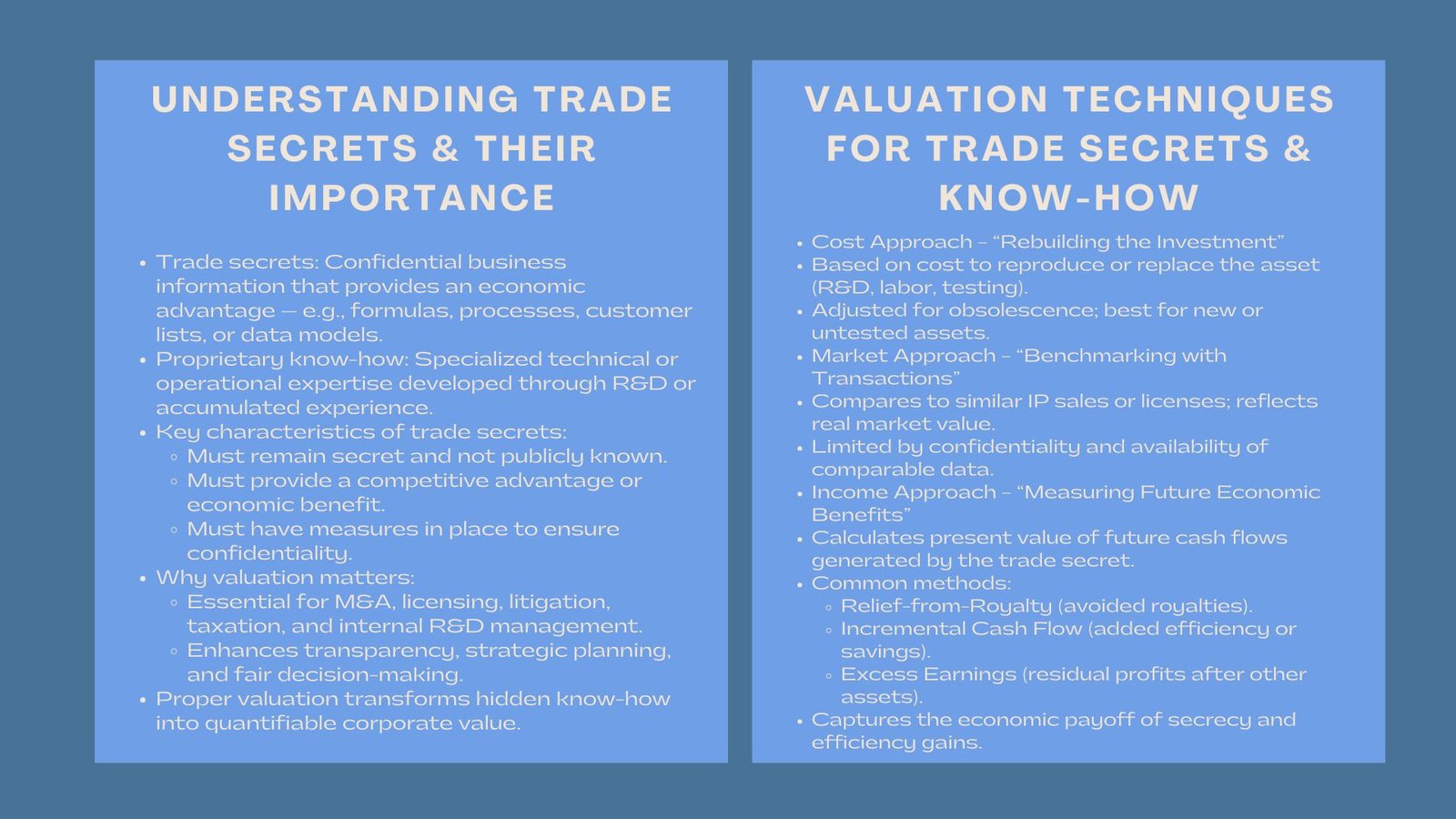
Trade secrets are secret business data whose economic value is generated by the secrecy of such information. These can comprise manufacturing procedures, product formula, marketing efforts, customer information or technical processes. Proprietary know-how is specialized skills or practices, which offer an advantage of production, service delivery or innovation.
Both types of intellectual capital have very high chances of being a product of research and development (R&D) over years and being one of the most valuable assets of a company. Their intangible and secret natures, however, make them hard to measure and defend.
The information should satisfy three major criteria in order to be classified as a trade secret:
- It has to be a secret and it should not be widely known.
- It should serve as a competitive edge or economic gain to the owner.
- Measured actions should be adopted to ensure its secrecy i.e. confidentiality and limited access.
These mechanisms may be lost if failure to protect them may lead to loss of trade secret status and its value.
Why Valuation Matters
Not only is it important to value trade secrets and proprietary know-how as far as financial reporting is concerned, but business strategy as well. Typical situations that involve valuation are:
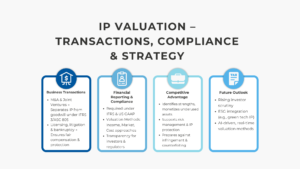
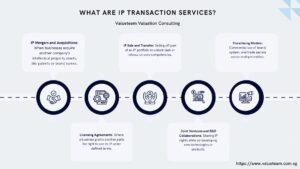
- Mergers and acquisitions (M&A): Fair value determination in the due diligence and purchase price allocation.
- Licensing and transfer of technology: How to establish proper royalty and contractual terms.
- Litigation: Measuring torts in misappropriation or breach of confidentiality claims.
- Tax and transfer pricing: Making sure that the international tax rules are being adhered to.
- Internal management: Measuring R&D and innovation investment returns.
Valuation in these settings brings about transparency and aids sound business decision making.
The Three Major Valuation Techniques.
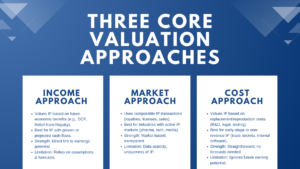
Like other intangibles, trade secrets and know-how are normally appraised at a cost, market or income approach depending on one or more of the three approaches that have been identified. Both methods have their own peculiarities and can be used separately and in combination with each other depending on the availability of data and its purpose.
Cost Approach: Rebuilding the Investment Value.
Cost method of valuation is calculated by the expense that would be needed to reproduce or replace the trade secret or know how. This approach presupposes that a rational consumer would not pay high prices on the asset, exceeding the expenses to prepare the same.
The relevant costs include both the direct R and D expenditures, labor, materials, and testing and the indirect cost such as the overhead costs and the opportunity costs. The functional, technological, or economic obsolescence are adjusted.
This is particularly appropriate where the trade secrets are new or untested, and the market or income information is not available. But it may fail to realize the maximum economic potential of mature technologies or those that have proven a commercial success.
Market Approach: Benchmarking with Like Transactions.
The market approach is an estimation of value based on the comparison of the asset with other similar trade secrets or know-hows that have been sold or licensed. It is based on the fact that the fair value of similar assets in the market is indicated by their prices.
This method involves having access to the transaction information which is not always easy to gain because of the secretiveness involved in proprietary technologies. However, industry databases, licensing registries and court filings can provide handy benchmarks.
Modifications are carried out to reflect the variation in the maturity of assets, exclusivity and the remaining economic life. This method will give a good indication of fair market value when the conditions are applicable and could be a validation tool to other methods.
A practical application of this method can be seen in trade secret valuation comparables and royalty benchmarking for confidential technology transfers, which helps assess licensing opportunities and market-based pricing strategies.
Income Approach: Measuring Future Economic Payoffs.
The income methodology uses trade secrets and know-how by estimating the value of future income flows that can be attributed to the asset in terms of the present value. It is the economic value of utilizing the confidential information, and it may be higher sales margins, reduction in costs or enhanced efficiency.
The most prevalent income-related strategies are:
- Relief-from-royalty approach: Approaches the value of the trade secret with the hypothetical royalties that a company would have paid in the event the company had not possessed the trade secret.
- Incremental cash flow technique: quantifies additional gains or cost reduction obtained as a result of the proprietary process.
- Excess earnings method: This method allocates the remaining profits to the trade secret after the returns to other assets are deducted.
This method involves a keen evaluation of expected cash flows, life of asset and discount rates. There is also the consideration by valuers of the likelihood of keeping secrets and the possibility of loss of competitiveness in the long run.
A good example of this approach is seen in income-based valuation modeling for proprietary process know-how in manufacturing companies, where unique process efficiencies or formulations generate measurable financial advantages.
The major Considerations in the valuation of trade secrets.
In the context of the importance given to trade secrets and know-how, a number of important factors play out:
- Legal protection: Power of internal controls, a policy of secrecy, and enforceability of contracts.
- Economic benefit: How much the trade secret is cost saving, differentiating or barriers to entry.
- Stage of development: Early-stage expertise might not have proven value as well as those applications that are established.
- Market and industry forces: Competitiveness, rate of innovation and threat of technological replacement.
- Remaining useful life: The number of years where data will be kept a secret and useful.
The valuers should also consider the risk of disclosure, mobility of employees and the risk of reverse engineering which can easily reduce the life time and value of an asset.
Difficulties in Appreciating Trade Secrets.
When working with confidential assets, valuation professionals have some special problems:
- Limitation of data: This is due to the unobservable market transactions or verifiable development costs.
- Intangibility: Impossibility of separating the value of one trade secret in terms of profitability.
- Legal ambiguity: Differentiated enforcement criteria.
- Maintaining secrecy: The value of the asset will depend on its secrecy.
These difficulties demonstrate the necessity of using effective methodologies, professionalism and thorough documentation in order to achieve defensible valuations.
Best Practice to a Trustworthy Valuation.
In order to promote compliance and credibility, valuation practitioners should:
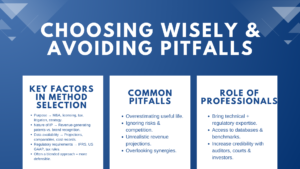
- Attempt to use several valuation techniques.
- Trust in written assumptions and market facts.
- Create involvement of technical specialists who are conversant with the process or technology involved.
- Periodically revise valuations as the market conditions or usage of it change.
- Establish the alignment of valuation practices with the known standards, including the International Valuation Standards (IVS) or the ISO 10668.
Such best practices do not only enhance accuracy, they also make audits readiness and acceptance by the regulations.
Conclusion
The competitive advantages of many organizations are based on trade secrets and proprietary know-how. Their valuation must be understood in moderate terms of technical, legal, and financial aspects. Using cost, market and income methods as well as combining industry standards and expert opinion will enable companies to measure and secure these high-value intangible resources more successfully.
Finally, a properly carried out valuation does not only empower strategic decision-making but also boosts the visibility of innovation, as a quantifiable and sustainable source of corporate value.