How Singapore Companies Use IP in Business Growth?

How Singapore Companies Use IP in Business Growth?

Understanding How Singapore Companies Use IP in Business Growth

For businesses in Singapore, intellectual property no longer exists as a legal requirement, but has become a key competitive asset. Today, patents, trademarks, copyrights, trade secrets, and even more elusive assets, such as brand reputation and proprietary know-how, are at the heart of how companies compete, attract investors and enter new markets. Whether it is entering the finance, business development or IP management world, it is more important to understand how companies use these assets to work than to just know how to register them. This article examines the impact of a robust Singapore IP strategy on IP business value, explores practical examples of IP in Business Growth, and provides guidance for IP professionals in the process of advising or working within IP-intensive companies, including tips on the challenges and lessons to be learned. The emphasis is on practice and not just law. 
How Singapore Companies Use IP in Business Growth?

What Does IP in Business Growth Actually Mean?

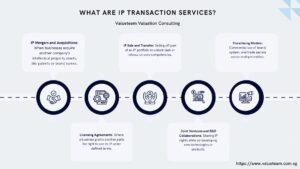
IP in Business Growth is actually the ability to recognise, safeguard and monetise the intangible assets of a business and have them add value directly to the bottom line, value and market position of a business. It can involve leasing a patented process to a local producer, relying on a registered trademark for higher selling prices, or incorporating exclusive software and trade secrets into a product that is difficult to replicate. The concept is very much linked to the fact that Singapore is a regional hub of business where companies can build up their assets here, secure them under a stable legal system, and then leverage them into the markets of Southeast Asian countries, Indian markets, or China. The intangible asset is not usually sold itself, but changes are made in the way a company decides to access the value of the rights it has. For example, a patent may be used to prevent another party from making a copy of a product, as collateral in a financing arrangement, and provide the patent owner with royalty income from licensing without the product being sold outright. The best people to identify opportunities that a legalistic review may fail to identify are those who know these uses, because for many companies the real value is not in the product itself, but in the engineering knowledge that has been built up over the years.

It’s a new paradigm, from IP as a defensive legal tool to IP as a growth asset that’s directly linked to the balance sheet. A company that only registers patents to stop the competition obtains a small part of the potential IP business value; a company that registers patents, licenses, franchises, or sells rights to the same ones also obtains a stream of royalties and partnership opportunities in a way it otherwise would not. One of the most valuable contributions a junior finance or business development pro can make to an IP-intensive employer is to identify and appreciate this distinction at an early stage. It also transforms the discussion of internal teams about IP from a legal cost centre to a line item for finance, sales and strategy teams. This is reflected in the decisions the business is making on a day-to-day basis, and can mean things like either a sales team can begin quoting a licensing fee to a prospective partner without weeks of legal involved or a finance team can incorporate projected royalty income in a forecast instead of just treating IP as a sunk cost. Businesses that make this cultural adjustment have better visibility of commercialising opportunities earlier because more employees are educated to look for commercial opportunities from within their own organisation. This awareness naturally builds over time, with each successful licensing deal or brand partnership serving as a reference that helps identify and assess the next opportunity. 

How Do Companies Build a Singapore IP Strategy?

The practical springboard to successful IP in Business Growth, typically, begins with an IP audit, a catalogue of all the patents, trademarks, designs, copyright and trade secrets owned or being developed by the company, and a mapping exercise of each item against a business goal, such as entering a market, raising finance or licensing revenue. It’s a real shame that many companies miss out on this step, only to arrive at the finish line with a portfolio of registered rights that might look good on paper but with nothing to show for it—no one was associated with the legal filing when it came to a commercial plan that generated revenue. Time and place are also important factors in a good strategy, as investing too early will cost the company the fees on assets that will never be sold, and investing too late will leave the company vulnerable to those places and states where it wishes to expand. Many companies will plan this around product roadmaps, with patent applications filed not long before the product is available to the public, but rather shortly before commercial direction is determined. The complexity doesn’t stop there – Geography also plays a part, as once a trademark or patent is registered in Singapore, the company cannot automatically assume that the same protection is offered in Indonesia, Vietnam or India and entering a new market without first verifying that the rights are not infringed may lead to trademark or patent infringement claims that a company did not anticipate. So, the disciplined audit also identifies the markets that the company will be filing in the next 2-3 years, which the company will consider entering, not just reacting to.

The second part of the sound strategy is governance, determining who should have ownership of internal IP decisions, how IP licensing opportunities are assessed and how the portfolio is reviewed as the business changes. Many growing businesses don’t give this solely to outside legal counsel and designate it to a cross-functional team of legal, finance and product professionals because commercial judgment as to which assets are most important is as critical as legal correctness. The IP portfolio is managed like a capital budget; priorities are set, reviews are made on a regular basis, and goals and objectives are tied to IP. Other firms institutionalise this by establishing an annual IP budget to account for the costs of filing, maintenance and enforcement, and then compare the costs to the revenues from the use of the portfolio (e.g. licensing or product). Decision authority is also part of governance, such as who approves a licensing term sheet, who signs off on dropping a low-value patent and who is accountable if a competitor starts to infringe and the company needs to determine whether litigation is worth the effort. In the absence of clarity, the next intelligent person to shout the question in a meeting determines the outcome of an IP decision, not a consistent set of commercial considerations that the company can apply in every instance. 

What Do Real Examples of IP Business Value Look Like?

Imagine a medium-sized electronics design house in Southeast Asia that was responsible for creating a patented technology for the management of batteries for small appliances. Instead of just selling products, the company granted licenses to three manufacturers throughout the region, creating a steady revenue stream of royalties that would eventually surpass product sales in total. The licensing revenue also meant that the company had a better basis for fundraising discussions, as an investor could refer to a diversified revenue stream with an IP foundation, instead of a single product stream. The cash flow forecasts also became much more reliable as the firm had a guaranteed income level because of the minimum guaranteed payments in the royalty agreements. The company also carved out an exclusive territory in its own home market, allowing the firm to continue generating revenues from its own brand of products, while simultaneously licensing out the same technology for others to use and produce elsewhere. This is textbook IP business value – one patent generated several revenues, and little capital investment was required compared to opening lines of manufacture in each licensed market.

Another one is a regional food and beverage business where the growth was almost exclusively based on trademark and brand licensing. The brand did not go into every new market to open stores, but rather it licensed its name, recipes and store design to local operators with strict quality agreements, enabling the brand to grow rapidly with a minimum investment while also collecting licensing revenue and continuing to use the brand in its stores. The brand also safeguarded its growth with a requirement for licensees to obtain some proprietary ingredients directly from the brand, creating an extra source of revenue in its supply chain, and quality-control audits to ensure the brand’s reputation in territories it had no direct responsibility for, other than to its licensees. In just a few years, licensing fees, ingredient sales, and royalties provided a greater percentage of group revenue than the direct-operated outlets. In both cases, IP in Business Growth is rarely reliant on a single mechanism – normally a mixture of licensing, franchising and direct commercialisation, depending on which markets a company can go into directly, and which it is better off going into through a partner who can navigate the local market. 

What Benefits and Challenges Come With Leveraging IP?

The advantages of an active approach to IP are relatively straightforward: extra licensing and royalty payments, greater negotiating leverage in partnership and acquisition situations, higher valuations if the intangible assets can clearly be seen to contribute to future earnings. Companies with a documented Singapore IP strategy also tend to be quicker to move during due diligence – ownership, registration status and commercial terms are not spread across departments, but are organised. This is more and more the case in Singapore because cross-border deals are commonplace, and acquirers are increasingly demanding a clean, well-documented IP position prior to closing – and are unable to do so late in diligence without delaying or repricing a transaction. In addition to deal contexts, having an organized portfolio can also give a company an advantage in the ongoing business negotiations it undertakes with its suppliers and distributors, because a supplier or distributor will be more likely to agree to reasonable terms if they know that they will be gaining access to valuable assets that will be protected and that the company will be more likely to defend in the event the relationship ends.

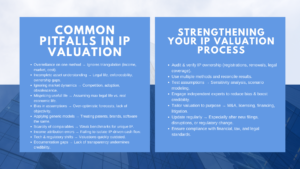
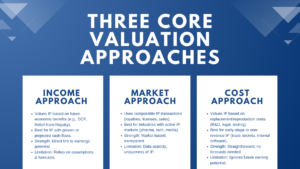
The difficulties are very much real too! The valuation of IP can be challenging because of the judgment calls that come with the relief from royalty approach, the income approach, and the fact that one advisor might value a well-performing internal portfolio of IP much higher than another independent advisor valuing it from an outside perspective and not assured of its commercial potential. International enforcement can also impose additional costs and complexity, especially for smaller businesses moving into markets where there are less stringent rules regarding IP enforcement, in which the cost of enforcement may exceed the value of the asset being defended. A key part of the process when building and defending an IP portfolio is ongoing, rather than occurring at the point of filing – this is balancing the cost of building and defending the portfolio with the actual value of the IP business that the portfolio provides. The challenges are further complicated by currency risk and market risk, as royalty income from a first land deal may be significantly less when it reaches its home country and is converted – something that is often overlooked when a licensing deal first appears to be a great deal on paper. Businesses that incorporate currency and repatriation into their license agreements from the start tend to settle on much more reasonable terms, and don’t find themselves disappointed when the royalty figure drops significantly when it gets to the parent company’s books. 

What Lessons Have Companies Learned From IP Missteps?

A constant theme is that investor protection isn’t about money—it’s an exercise in wasting money and developing a false sense of security. Firms that simply see registration as the end of the road and not the beginning of a licensing or product strategy often find themselves, years after their patents expire, sitting on a technology that never produced any revenue because patent renewal was based on legal counsel’s opinion and the counsel lacked insight into the commercial relevance of the technology. One of the easiest corrective measures to take is to make every decision for renewal and maintenance contingent on having an active business case for it; this is something that finance teams are likely to be able to enforce more than legal teams will be able to. Finance teams will be the ones that will be tracking which product lines and licensing relationships are generating revenue anyway. Some businesses now incorporate this check into the annual budgeting process, and have to submit a brief commercial justification memo before renewal of a patent above a certain amount is granted.

The second is ownership clarity, especially when dealing with work done by contractors, joint venture partners and former employees. When a dispute arises over whether one party or another has the right to a piece of software, a design or a brand asset, it can stall a licensing deal or a funding round at the time when the company is most in need of the IP being uncontested, and solving disputes after the fact is generally longer and more expensive than preventing them. Ensuring that all clauses are clear on ownership in any contract from the outset – and not argued after the event – is one of the things a lot of companies learn the hard way and one of the first questions experienced advisors ask when looking at a company’s IP position. One of the most common causes of that is when two companies get into a joint development agreement for a new product on which both sides assume that the ownership of the product is just evenly distributed with no one ever agreeing in writing as to who gets to make the product decisions, who is going to have to enforce it, and who is going to benefit if the product is sold or spun off later. Taking care of this issue at the term sheet phase (before development is started) is a relatively inexpensive endeavour, as compared to resolving this issue after the technology has already attracted commercial interest, which can take months of negotiation, and result in a far less satisfactory outcome for at least one of the parties. 

Five Key Steps to Capturing IP Business Value

The following steps outline in sequence the progression of a company from an unstimulated IP portfolio to one that is proactively contributing to fundraising and growth.

  1. When spending more money on registration/renewal, audit existing intangible assets, and put each one to a specific commercial goal, whether licensing income, market entry or fundraising leverage.
  2. Establish clear, internal ownership for IP decisions across legal, finance and product/business development, meaning that both commercial and legal considerations are reflected in each filing and licensing decision.
  3. Consider licensing, franchising and direct commercialisation separately for each target market because a suitable strategy in one country may not work in the neighbouring country due to varying partners and enforcement conditions.
  4. Incorporate ownership and assignment provisions into all contracts, employee and partner agreements from the ground up, not trying to figure it out after the fact when a disagreement or funding round has already taken place.
  5. Review IP portfolio on a regular basis, preferably at the time of budgeting, and remove assets that will not support growth, and allocate resources to assets that will. 
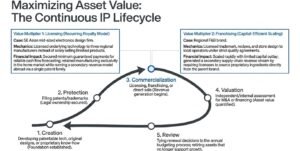
Table 1: Stages of IP in Business Growth
Stage Primary Activity Typical Outcome
Creation Developing patentable technology, original designs, or brand identity Foundation asset established
Protection Filing patents, trademarks, or registering copyright Legal ownership secured
Commercialization Licensing, franchising, or direct product sale Revenue generation begins
Valuation Independent or internal valuation for financing or M&A Asset value quantified
Review Periodic portfolio audit and renewal decisions Portfolio aligned with strategy

Conclusion: Turning IP Into a Growth Lever

The bottom line for professionals in or advising Singapore companies is that IP only has value when it is proactively managed and not passively deposited. Businesses that view their portfolio as a growth tool, incorporate ownership clarity in every agreement and review their IP strategy in Singapore as the business changes consistently reap more IP business value than those businesses that regard IP registration as a compliance exercise. From licensing income to a better fundraising position to market entry, the concepts are the same—audit what you own, link it to a plan, and look at it frequently—just as finance professionals do in other areas. When an individual is just getting started in this business, the quickest way to add value is to identify for each IP asset that a company owns a clear and straightforward commercial question: what specific revenue, partnership or valuation result does this asset promise to produce, and when? 
Frequently Asked Questions

Q1. Why is intellectual property important for business growth in Singapore?

Intellectual property helps Singapore companies protect innovations, build competitive advantages, generate licensing revenue, and enhance long-term business value.

Patents, trademarks, copyrights, trade secrets, software, proprietary technology, and customer-related intangible assets are key intellectual property assets that support business growth.

IP valuation helps businesses determine the fair value of intellectual property for fundraising, licensing, mergers and acquisitions, strategic partnerships, and international expansion.

Yes. SMEs can use IP valuation to attract investors, negotiate licensing agreements, secure financing, and make informed strategic business decisions.

Companies should obtain an IP valuation before fundraising, licensing, mergers and acquisitions, financial reporting, tax planning, litigation, or commercialising intellectual property.

How Singapore Companies Use IP in Business Growth?

Understanding How Singapore Companies Use IP in Business Growth

For businesses in Singapore, intellectual property no longer exists as a legal requirement, but has become a key competitive asset. Today, patents, trademarks, copyrights, trade secrets, and even more elusive assets, such as brand reputation and proprietary know-how, are at the heart of how companies compete, attract investors and enter new markets. Whether it is entering the finance, business development or IP management world, it is more important to understand how companies use these assets to work than to just know how to register them. This article examines the impact of a robust Singapore IP strategy on IP business value, explores practical examples of IP in Business Growth, and provides guidance for IP professionals in the process of advising or working within IP-intensive companies, including tips on the challenges and lessons to be learned. The emphasis is on practice and not just law. 

How Singapore Companies Use IP in Business Growth?

What Does IP in Business Growth Actually Mean?

IP in Business Growth is actually the ability to recognise, safeguard and monetise the intangible assets of a business and have them add value directly to the bottom line, value and market position of a business. It can involve leasing a patented process to a local producer, relying on a registered trademark for higher selling prices, or incorporating exclusive software and trade secrets into a product that is difficult to replicate. The concept is very much linked to the fact that Singapore is a regional hub of business where companies can build up their assets here, secure them under a stable legal system, and then leverage them into the markets of Southeast Asian countries, Indian markets, or China. The intangible asset is not usually sold itself, but changes are made in the way a company decides to access the value of the rights it has. For example, a patent may be used to prevent another party from making a copy of a product, as collateral in a financing arrangement, and provide the patent owner with royalty income from licensing without the product being sold outright. The best people to identify opportunities that a legalistic review may fail to identify are those who know these uses, because for many companies the real value is not in the product itself, but in the engineering knowledge that has been built up over the years.

It’s a new paradigm, from IP as a defensive legal tool to IP as a growth asset that’s directly linked to the balance sheet. A company that only registers patents to stop the competition obtains a small part of the potential IP business value; a company that registers patents, licenses, franchises, or sells rights to the same ones also obtains a stream of royalties and partnership opportunities in a way it otherwise would not. One of the most valuable contributions a junior finance or business development pro can make to an IP-intensive employer is to identify and appreciate this distinction at an early stage. It also transforms the discussion of internal teams about IP from a legal cost centre to a line item for finance, sales and strategy teams. This is reflected in the decisions the business is making on a day-to-day basis, and can mean things like either a sales team can begin quoting a licensing fee to a prospective partner without weeks of legal involved or a finance team can incorporate projected royalty income in a forecast instead of just treating IP as a sunk cost. Businesses that make this cultural adjustment have better visibility of commercialising opportunities earlier because more employees are educated to look for commercial opportunities from within their own organisation. This awareness naturally builds over time, with each successful licensing deal or brand partnership serving as a reference that helps identify and assess the next opportunity. 

How Do Companies Build a Singapore IP Strategy?

The practical springboard to successful IP in Business Growth, typically, begins with an IP audit, a catalogue of all the patents, trademarks, designs, copyright and trade secrets owned or being developed by the company, and a mapping exercise of each item against a business goal, such as entering a market, raising finance or licensing revenue. It’s a real shame that many companies miss out on this step, only to arrive at the finish line with a portfolio of registered rights that might look good on paper but with nothing to show for it—no one was associated with the legal filing when it came to a commercial plan that generated revenue. Time and place are also important factors in a good strategy, as investing too early will cost the company the fees on assets that will never be sold, and investing too late will leave the company vulnerable to those places and states where it wishes to expand. Many companies will plan this around product roadmaps, with patent applications filed not long before the product is available to the public, but rather shortly before commercial direction is determined. The complexity doesn’t stop there – Geography also plays a part, as once a trademark or patent is registered in Singapore, the company cannot automatically assume that the same protection is offered in Indonesia, Vietnam or India and entering a new market without first verifying that the rights are not infringed may lead to trademark or patent infringement claims that a company did not anticipate. So, the disciplined audit also identifies the markets that the company will be filing in the next 2-3 years, which the company will consider entering, not just reacting to.

The second part of the sound strategy is governance, determining who should have ownership of internal IP decisions, how IP licensing opportunities are assessed and how the portfolio is reviewed as the business changes. Many growing businesses don’t give this solely to outside legal counsel and designate it to a cross-functional team of legal, finance and product professionals because commercial judgment as to which assets are most important is as critical as legal correctness. The IP portfolio is managed like a capital budget; priorities are set, reviews are made on a regular basis, and goals and objectives are tied to IP. Other firms institutionalise this by establishing an annual IP budget to account for the costs of filing, maintenance and enforcement, and then compare the costs to the revenues from the use of the portfolio (e.g. licensing or product). Decision authority is also part of governance, such as who approves a licensing term sheet, who signs off on dropping a low-value patent and who is accountable if a competitor starts to infringe and the company needs to determine whether litigation is worth the effort. In the absence of clarity, the next intelligent person to shout the question in a meeting determines the outcome of an IP decision, not a consistent set of commercial considerations that the company can apply in every instance. 

What Do Real Examples of IP Business Value Look Like?

Imagine a medium-sized electronics design house in Southeast Asia that was responsible for creating a patented technology for the management of batteries for small appliances. Instead of just selling products, the company granted licenses to three manufacturers throughout the region, creating a steady revenue stream of royalties that would eventually surpass product sales in total. The licensing revenue also meant that the company had a better basis for fundraising discussions, as an investor could refer to a diversified revenue stream with an IP foundation, instead of a single product stream. The cash flow forecasts also became much more reliable as the firm had a guaranteed income level because of the minimum guaranteed payments in the royalty agreements. The company also carved out an exclusive territory in its own home market, allowing the firm to continue generating revenues from its own brand of products, while simultaneously licensing out the same technology for others to use and produce elsewhere. This is textbook IP business value – one patent generated several revenues, and little capital investment was required compared to opening lines of manufacture in each licensed market.

Another one is a regional food and beverage business where the growth was almost exclusively based on trademark and brand licensing. The brand did not go into every new market to open stores, but rather it licensed its name, recipes and store design to local operators with strict quality agreements, enabling the brand to grow rapidly with a minimum investment while also collecting licensing revenue and continuing to use the brand in its stores. The brand also safeguarded its growth with a requirement for licensees to obtain some proprietary ingredients directly from the brand, creating an extra source of revenue in its supply chain, and quality-control audits to ensure the brand’s reputation in territories it had no direct responsibility for, other than to its licensees. In just a few years, licensing fees, ingredient sales, and royalties provided a greater percentage of group revenue than the direct-operated outlets. In both cases, IP in Business Growth is rarely reliant on a single mechanism – normally a mixture of licensing, franchising and direct commercialisation, depending on which markets a company can go into directly, and which it is better off going into through a partner who can navigate the local market. 

What Benefits and Challenges Come With Leveraging IP?

The advantages of an active approach to IP are relatively straightforward: extra licensing and royalty payments, greater negotiating leverage in partnership and acquisition situations, higher valuations if the intangible assets can clearly be seen to contribute to future earnings. Companies with a documented Singapore IP strategy also tend to be quicker to move during due diligence – ownership, registration status and commercial terms are not spread across departments, but are organised. This is more and more the case in Singapore because cross-border deals are commonplace, and acquirers are increasingly demanding a clean, well-documented IP position prior to closing – and are unable to do so late in diligence without delaying or repricing a transaction. In addition to deal contexts, having an organized portfolio can also give a company an advantage in the ongoing business negotiations it undertakes with its suppliers and distributors, because a supplier or distributor will be more likely to agree to reasonable terms if they know that they will be gaining access to valuable assets that will be protected and that the company will be more likely to defend in the event the relationship ends.

The difficulties are very much real too! The valuation of IP can be challenging because of the judgment calls that come with the relief from royalty approach, the income approach, and the fact that one advisor might value a well-performing internal portfolio of IP much higher than another independent advisor valuing it from an outside perspective and not assured of its commercial potential. International enforcement can also impose additional costs and complexity, especially for smaller businesses moving into markets where there are less stringent rules regarding IP enforcement, in which the cost of enforcement may exceed the value of the asset being defended. A key part of the process when building and defending an IP portfolio is ongoing, rather than occurring at the point of filing – this is balancing the cost of building and defending the portfolio with the actual value of the IP business that the portfolio provides. The challenges are further complicated by currency risk and market risk, as royalty income from a first land deal may be significantly less when it reaches its home country and is converted – something that is often overlooked when a licensing deal first appears to be a great deal on paper. Businesses that incorporate currency and repatriation into their license agreements from the start tend to settle on much more reasonable terms, and don’t find themselves disappointed when the royalty figure drops significantly when it gets to the parent company’s books. 

What Lessons Have Companies Learned From IP Missteps?

A constant theme is that investor protection isn’t about money—it’s an exercise in wasting money and developing a false sense of security. Firms that simply see registration as the end of the road and not the beginning of a licensing or product strategy often find themselves, years after their patents expire, sitting on a technology that never produced any revenue because patent renewal was based on legal counsel’s opinion and the counsel lacked insight into the commercial relevance of the technology. One of the easiest corrective measures to take is to make every decision for renewal and maintenance contingent on having an active business case for it; this is something that finance teams are likely to be able to enforce more than legal teams will be able to. Finance teams will be the ones that will be tracking which product lines and licensing relationships are generating revenue anyway. Some businesses now incorporate this check into the annual budgeting process, and have to submit a brief commercial justification memo before renewal of a patent above a certain amount is granted.

The second is ownership clarity, especially when dealing with work done by contractors, joint venture partners and former employees. When a dispute arises over whether one party or another has the right to a piece of software, a design or a brand asset, it can stall a licensing deal or a funding round at the time when the company is most in need of the IP being uncontested, and solving disputes after the fact is generally longer and more expensive than preventing them. Ensuring that all clauses are clear on ownership in any contract from the outset – and not argued after the event – is one of the things a lot of companies learn the hard way and one of the first questions experienced advisors ask when looking at a company’s IP position. One of the most common causes of that is when two companies get into a joint development agreement for a new product on which both sides assume that the ownership of the product is just evenly distributed with no one ever agreeing in writing as to who gets to make the product decisions, who is going to have to enforce it, and who is going to benefit if the product is sold or spun off later. Taking care of this issue at the term sheet phase (before development is started) is a relatively inexpensive endeavour, as compared to resolving this issue after the technology has already attracted commercial interest, which can take months of negotiation, and result in a far less satisfactory outcome for at least one of the parties. 

Five Key Steps to Capturing IP Business Value

The following steps outline in sequence the progression of a company from an unstimulated IP portfolio to one that is proactively contributing to fundraising and growth.

  1. When spending more money on registration/renewal, audit existing intangible assets, and put each one to a specific commercial goal, whether licensing income, market entry or fundraising leverage.
  2. Establish clear, internal ownership for IP decisions across legal, finance and product/business development, meaning that both commercial and legal considerations are reflected in each filing and licensing decision.
  3. Consider licensing, franchising and direct commercialisation separately for each target market because a suitable strategy in one country may not work in the neighbouring country due to varying partners and enforcement conditions.
  4. Incorporate ownership and assignment provisions into all contracts, employee and partner agreements from the ground up, not trying to figure it out after the fact when a disagreement or funding round has already taken place.
  5. Review IP portfolio on a regular basis, preferably at the time of budgeting, and remove assets that will not support growth, and allocate resources to assets that will. 
Table 1: Stages of IP in Business Growth
Stage Primary Activity Typical Outcome
Creation Developing patentable technology, original designs, or brand identity Foundation asset established
Protection Filing patents, trademarks, or registering copyright Legal ownership secured
Commercialization Licensing, franchising, or direct product sale Revenue generation begins
Valuation Independent or internal valuation for financing or M&A Asset value quantified
Review Periodic portfolio audit and renewal decisions Portfolio aligned with strategy

Conclusion: Turning IP Into a Growth Lever

The bottom line for professionals in or advising Singapore companies is that IP only has value when it is proactively managed and not passively deposited. Businesses that view their portfolio as a growth tool, incorporate ownership clarity in every agreement and review their IP strategy in Singapore as the business changes consistently reap more IP business value than those businesses that regard IP registration as a compliance exercise. From licensing income to a better fundraising position to market entry, the concepts are the same—audit what you own, link it to a plan, and look at it frequently—just as finance professionals do in other areas. When an individual is just getting started in this business, the quickest way to add value is to identify for each IP asset that a company owns a clear and straightforward commercial question: what specific revenue, partnership or valuation result does this asset promise to produce, and when? 
Frequently Asked Questions

Q1. Why is intellectual property important for business growth in Singapore?

Intellectual property helps Singapore companies protect innovations, build competitive advantages, generate licensing revenue, and enhance long-term business value.

Patents, trademarks, copyrights, trade secrets, software, proprietary technology, and customer-related intangible assets are key intellectual property assets that support business growth.

IP valuation helps businesses determine the fair value of intellectual property for fundraising, licensing, mergers and acquisitions, strategic partnerships, and international expansion.

Yes. SMEs can use IP valuation to attract investors, negotiate licensing agreements, secure financing, and make informed strategic business decisions.

Companies should obtain an IP valuation before fundraising, licensing, mergers and acquisitions, financial reporting, tax planning, litigation, or commercialising intellectual property.

Related Posts

Everything You Need to Know About IP Valuation with Valueteam

Valueteam provides expert intellectual property (IP) valuation services to help businesses assess, protect, and monetize their intangible assets.