Why Is Accurate IP Valuation Critical for Investors?
Understanding Why Is Accurate IP Valuation Critical for Investors?
Investors consider them when they are looking into a technology firm, a pharmaceutical producer, or a consumer brand, but they’re often buying patents, trademarks, trade secrets and proprietary processes not a piece of machinery on a balance sheet. If you are any type of analyst, associate, or portfolio manager in a VC or privaccurate IP valuation isl eventually have to ask yourself why is accurate IP valuation so critical to investors because getting it wrong means you are either paying too much for the company or you are completely overlooking the right deal. Valuation of intellectual property is often complex and nonlinear: such assets are not publicly traded and the value is determined by the legal protection it receives, its position in the competitive market, future earning potential, and many other factors. In this article, the author covers how IP asset valuation plays a role in investment decisions, the IP valuation methods that investors actually use, the importance of IP due diligence before an investment occurs and what lessons have been learned by investors based on IP deals where it made all the difference.
Why Is Accurate IP Valuation Critical for Investors During Early-Stage Deals?
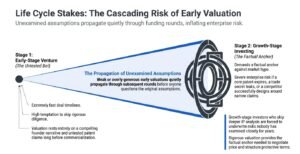
Why Is Accurate IP Valuation Critical for Investors is particularly apparent when the business is in its early stages, as there may not be enough revenue history for the company, or the whole investment proposition depends on the quality of the company’s patent portfolio, algorithm, or defensible trade. Where an investor in a biotechnology start-up is making a speculative investment, for example, the investor is effectively taking a punt on the firm’s IP protection, and over- or under-valuing that protection can result in a bad investment. The analysis performed in the first funding round will influence all future funding rounds, as later investors will also heavily depend on the diligence and valuation results of the first round. A poor valuation early on – particularly if it’s too high – can creep through multiple investment rounds and end up being a problem only after a number of people finally take a second look at the numbers and start to doubt the initial assumptions. A few experienced venture investors will tell you that it’s in the initial funding round when everyone is the most tempted to do painstaking due diligence – and when the time is quickest and the story is most exciting and least proven.
As a company grows, its stakes only get bigger as the value of its IP becomes more of its enterprise value. The more sophisticated investor who wants to invest in a growth equity software company must understand the amount of the valuation attributable to defensible technology versus the amount attributable to market excitement and enthusiasm for some positive growth story that is disconnected from the underlying asset value. Valuing IP at this point properly sets a fact-set for investors to leverage when negotiating valuation, protect terms, and understand the implications of the investment thesis should a key patent run out, a trade secret be disclosed or the market design around the company’s core IP. Many people who invest in the growth stage without stepping back to look at this in detail, basing their investment on the results of an earlier round, end up investing in risks no one has looked at in detail for a while. One of the more practical safeguards that a growth investor can take is establishing a routine of constantly reviewing this analysis as new funding milestones are met or the entire project moves forward, instead of just when the first check is written.
How Does IP Asset Valuation Shape Why Is Accurate IP Valuation Critical for Investors?
IP asset valuation heavily influences investment decisions because it can help to establish the value of a company’s assets, and the amount of that value that can be legally secured and protected compared with assets that may be easier to duplicate by a competitor with a larger budget. A thorough IP asset valuation could result in a company with high IP protection and broad patent claims being a much better investment for the investor than the one that is just a brand name and has a first-mover advantage. The difference is significant for risk assessment: longer-lasting technology that is patented tends to provide a longer lasting competitive advantage than execution speed or market timing. But investors who don’t distinguish between them clearly end up predicting two risk profiles as the same, and that will come back to bite them hard when there is a well-funded competitor in the market. A good IP asset valuation is supposed to avoid just such an eventuality – a clear and explicit assessment of defensibility based on evidence, rather than a tacit assumption, real-world, made in an optimistic growth forecast.
A useful real world example of an investment firm that was raising a growth round, significantly based on a proprietary manufacturing proces, that theaimed reduced pro,duction costs significantly compared to the industry standards is a specialty chemicals company. Investors who hired an independent IP asset valuation found that although the asset was covered by a combination of patents and trade secrets, two of the company’s most commercially important patent claims were less broad than management had suggested in its pitch deck, and argued that it would be possible to develop a comparable process without infringing upon the company’s actual legal protection. This discovery was not an end to the deal, but it did result in the investors bargaining for a lower valuation, and also attaching specific protective terms linked to the company’s patent prosecution work, a direct and practical demonstration of how IP asset valuation can affect real investment results and not just an academic exercise. The founders, for their part, later admitted that the independent review actually helped to make the eventual partnership a successful one, as they both had a more accurate picture of the technology’s actual legal standing and not some heroic story that would have led to trouble later. The lesson to be learned here is that diligent and proper handling can be non-threatening; it can make the relationship between investor and founder better, not just tougher for the investor.
Table 1: How IP Asset Valuation Informs Investor Decisions
| Valuation Finding | Investor Implication | Typical Response |
|---|---|---|
| Strong, broad patent protection | Durable competitive moat | Support for higher valuation |
| Narrow or easily designed-around claims | Weaker long-term defensibility | Lower valuation or added protective terms |
| Heavy reliance on trade secrets | Risk from employee turnover or leaks | Request stronger confidentiality controls |
| Pending or unresolved patent applications | Uncertain future protection | Valuation tied to milestone-based tranches |
| Expiring core patents | Declining exclusivity over time | Discounted terminal value in the model |
What IP Valuation Methods Explain Why Is Accurate IP Valuation Critical for Investors?
Typically, the types of valuation methodologies that investors employ can be divided into the same three categories as those used in intellectual property valuation generally; however, each has certain considerations when applied through an investor’s eyes and not through an accountant’s. The ie approach, most commonly used in the relief from royalty method or the multi-period excess ear,ningearnings estimates value of the patent, trademark or proprietary process according to the future cacash flowshey expect to generate; this approach is often highly valued by investors because it is the cash flows they are trying to underwrite. The market method invomaking a comparisonrison with the market valuation of other IP which is similar to the asset in question, but this can be hard to find, especially in the case of very novel technology for which there is no existing comparable transaction. Investors frequently purposefully utilize two or more of these IP valuation techniques to provide a range of possible values, as opposed to a single point estimate, and use that range to guide negotiations, rather than relying on a single point estimate leading to disputes. The cost approach is far less common in investor-based IP valuation approaches, since the cost to bring a technology to a competitive market when it’s developed is often not remotely correlated to the technology’s expected earnings in that market.
These five factors are usually the ones investors and their advisors consider when valuing IP during a deal. First, the validity and enforceability of the underlying IP should be confirmed before developing any financial model, as a faulty patent would be worthless for even the most complicated valuation. In the second place, determining if the earnings forecasts that form the basis of the valuation are truly market-proven and not just the optimistic forecasts of management. Third, the use of an appropriate discount rate reflecting the particular risk associated with the intellectuawell-guardednder consideration, as a wide-ranging and well guarded patent estate would have a different risk premium than a single and narrow claim that is yet to be proven. Fourth, making the discussion of the competitive landscape explicit: even if the law is sufficiently strong, it is of little economic value if the competitors can do something similar with other, non-infringing technology. Fifth, stress-testing the valuation with a range of scenarios, such as an attempt to successfully challenge the validity of the IP rights, as disputes regarding IP can have a material adverse effect on the valuation of an asset with little warning. Investors who consistently perform these five checks on every deal, not just on those where a red flag has already shown up, typically are able to uncover more of the issues that would only become apparent once capital had been exchanged (and by then there is little they can do about it).
Why Does IP Due Diligence Matter for Why Is Accurate IP Valuation Critical for Investors?
No matter how sophisticated the valuation model is that is developed on top of IP, omitting or rushing through due diligence is a fundamental mistake. A comprehensive IP due diligence may involve confirming title to all patents and trademarks, conducting inquiries into any pending patent or trademark litigation or proceedings for Opposition, verifying that employee and contractor agreements adequately provide for assignment of invention rights to the Company, and checking for any known licenses that would otherwise limit the Company’s ability whoommercially exploit its own technology. Investors that take a leap without doing this research will run the risk of making a full investment in a company based on IP that they do not fully own or can’t defend if it is challenged. This risk is no longer hypothetical, but, in fact, occurs more frequently than most new investors might think, particularly in companies that achieved rapid growth from early informal agreements with contractors instead of formal employment contracts. One of the most common, and also one of the avoidable, problems that deal counsel ofteearly-stage in a comprehensive IP due diligence process on an early stage company.
The advantages of comprehensive IP due diligence are simple: investors’ capital is not invested in IP that appears to be strong on the surface but has unforeseen legal or ownership issues that could make the investhat tment proposition unworkable. What’s the problem is it takes real time and specialized legal and technical due diligence, which can be an unwelcome friction point in a competitive deal process when a founder has othe,r interested investors, a tight timeline for closure and a lack of time to invest in the process. One lesson that many seasoned investors can learn is that the investments that have ended up in unexpected intellectual property disputes are disproportionately represented among those where IP due diligence was rushed to be sure of a competitive price. Founders have been taught this lesson the hard way, so they’re told at the outset of any deal, rather than mid-deal, that they need to have a minimum diligence timeline as part of their investment process.
What Lessons Show Why Is Accurate IP Valuation Critical for Investors Over Time?
In many of the transactions that have been closed, a few lessons come up so frequently that it would seem to be a truly valuable piece of advice for those who are still trying to find out why accurate IP valuation is essential to an investor in practice. First, do not take founders’ self-assessment of the strength of their IP protection at face value, as founders are generally going to want to spin a positive narrative about their IP protection, even if they are doing it inadvertently. Second, involve ndependent technical experts along with legal counsel, when the underlying technology is truly novel or complex; in this scenof, neither side is likely to get the whole picture from an asset’s real defensibility from the other side alone. Third, review indo tellectual property valuations on a regular basis and not assume anything will stay the same after investment, as both patent portfolios and competitive situations and precedents are still developing after investment. Fourth, establish a working relationship with ‘specialist’ IP counsel from the outset of an investment, not during the initial investment or exit; new risks are more manageable when identified at an earlier stage than when they are identified at later investment or exit stages.
But the most important takeaway is that the right valuation of IP assets can pay off to the investor who does not simply check the box for IP valuation at the start of the investment, but applies it as a continuous process throughout the investment life cycle. Portfolio managers who do not stop paying attention to the strength and relevance of a portfolio compthe any’s IP rights long after the investment are usually first to identify potential threats anitsortunities well before a company reveals them in their quarterly financial statements. Those who learn to value IP assets and conduct IP due diligence at the outset of their careers, rather than passively outsourcing the entire process to experts, are likely to be much more valuable team members when reviewing tech and/or brand-based investments. This expertise is also cumulative, as an individual’s experience in a given deal will teach him or her a slightly different pattern of intellectual property structures and risk factors, and this experience of pattern recognition is difficult to reproduce Accurate IP Valuation Isse.