
Advanced Customer Relationship Valuation
Valuation of Customer Relationships and Databases
Introduction: Advanced Customer Relationship Valuation
In the modern data-driven economy, customer relationships and databases have emerged as critical intangible assets that significantly influence business valuation and strategic positioning. Unlike physical assets, the value of a company’s customer base lies in its potential to generate recurring revenue, customer loyalty, and opportunities for cross-selling and up-selling. Databases, on the other hand, embody the analytical foundation that enables businesses to understand, predict, and influence consumer behavior. However, quantifying the economic benefits derived from these intangible assets is inherently complex. The valuation of customer relationships and databases requires a nuanced approach that blends accounting principles, financial modeling, behavioral analytics, and strategic foresight. This is especially relevant in the context of mergers and acquisitions (M&A), purchase price allocation (PPA), and financial reporting under , valuation of customer relationships under IFRS 3 and IAS 38 where companies must determine and disclose the fair value of acquired intangible assets. This article explores the conceptual foundation, methodologies, and practical applications of valuing customer relationships and databases, emphasizing their importance in decision-making, financial transparency, and strategic management.The Relevance of Customer Relationship and Database Valuation
Bridging Financial Reporting and Business Strategy
Valuing customer relationships is not merely an accounting formality—it represents an alignment between financial disclosure and long-term strategy. A customer base is one of the most powerful indicators of a company’s market strength, stability, and future cash flow potential. From a strategic standpoint, understanding customer value helps management optimize marketing efforts, improve retention strategies, and assess the return on customer acquisition costs. For investors and regulators, transparent valuation of customer relationships provides a realistic depiction of enterprise value beyond tangible assets. It enhances comparability among firms, clarifies the sources of goodwill, and prevents overstatement of intangible value in financial statements. Thus, the valuation process becomes both a financial and strategic instrument, linking numbers with customer-centric business models.The Increasing Complexity of Intangible Asset Measurement
In today’s economy, customer data and relationships evolve rapidly, influenced by digital platforms, subscription models, and personalized experiences. Traditional valuation approaches that rely solely on historical revenue patterns often fail to capture the dynamic nature of customer behavior. Instead, advanced models now incorporate predictive analytics, customer lifetime value (CLV) metrics, and probabilistic churn analysis. The challenge lies in quantifying relationships that are intangible, uncertain, and interdependent. Moreover, regulatory frameworks such as data privacy laws and fair value measurement standards further complicate the valuation process. As a result, valuing customer relationships and databases demands a sophisticated blend of accounting expertise, data analytics, and economic reasoning.Core Components of Valuation under IFRS Framework
Identification and Recognition of Intangible Assets
Under IFRS 3 and IAS 38, customer relationships and databases acquired in a business combination must be recognized separately from goodwill if they meet the definition of an intangible asset—identifiable, controlled, and expected to generate future economic benefits. Customer relationships typically include contractual and non-contractual connections that drive recurring business, such as subscriber lists, loyalty programs, or client contracts. Databases encompass structured customer information, transaction histories, behavioral data, and analytical tools that enable targeted marketing and decision-making. Identifying these assets accurately is essential for fair valuation, as their contribution to the overall business model can be significant.Estimating the Economic Benefits
The core of valuation lies in estimating future economic benefits attributable to customer relationships and databases. This involves analyzing revenue retention, repeat purchases, churn rates, and cost-to-serve dynamics. The objective is to isolate cash flows that can be directly linked to these intangibles. For customer relationships, analysts examine the longevity of engagement, the probability of renewal or repurchase, and the incremental profits expected from these interactions. For databases, the benefits may stem from improved marketing effectiveness, higher conversion rates, or enhanced pricing precision derived from data insights. The valuation should capture not only direct monetary benefits but also indirect contributions to overall profitability.Valuation Methodologies
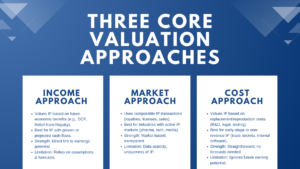
The valuation of customer relationships and databases can be approached using several methods, depending on data availability and asset characteristics. Among the most widely applied are the Multi-Period Excess Earnings Method (MPEEM), the With-and-Without Method, and the Cost Approach. Under the Multi-Period Excess Earnings Method (MPEEM), the value of customer relationships is derived by estimating the present value of cash flows attributable solely to those relationships, after deducting contributory asset charges for supporting assets such as trademarks, technology, and working capital. This method is conceptually robust as it aligns with the discounted cash flow (DCF) principle, isolating the incremental earnings generated by customer relationships. The With-and-Without Method assesses the difference in enterprise value with and without the specific intangible asset. This approach is particularly relevant for databases that enable enhanced decision-making or operational efficiency. By comparing performance under both scenarios, analysts can infer the value contribution of the database to the overall business. The Cost Approach, although less common, may be applied when future economic benefits are difficult to quantify. It estimates value based on the cost required to recreate or replace the asset, including data acquisition, cleaning, verification, and technological integration. This approach is often used for customer databases in early development or when market evidence is limited.Forecasting and Discounting
Accurate forecasting of revenue and cost streams is essential. Customer attrition and acquisition rates must be modeled using realistic assumptions that reflect market conditions, customer behavior patterns, and management’s strategic plans. Once projected, these cash flows are discounted to their present value using a rate that reflects the asset’s risk profile, consistent with IAS 36 and IFRS 13 fair value principles. The chosen discount rate should capture both systematic risks (such as macroeconomic volatility) and specific risks (such as customer churn uncertainty). This ensures that the valuation not only meets accounting standards but also reflects economic reality.Practical Implementation in Different Contexts
In Mergers and Acquisitions
In M&A transactions, the valuation of customer relationships and databases forms a critical part of the purchase price allocation process. Acquirers must allocate the transaction price among tangible and identifiable intangible assets, recognizing that customer-related intangibles often account for a significant share of goodwill. For instance, when a telecommunications company acquires a smaller provider, the value of the customer base—measured through expected retention and lifetime value—directly influences the purchase price. Accurate valuation ensures that post-acquisition financial statements reflect true economic value and facilitates more informed integration strategies.In Technology and E-Commerce Sectors
In data-centric industries, customer databases are fundamental drivers of value. E-commerce platforms rely on their user data to optimize recommendation systems and pricing algorithms, while software-as-a-service (SaaS) businesses leverage subscription data to forecast churn and renewal rates. Valuation models in these sectors must integrate both financial and non-financial metrics, such as user engagement, active accounts, and data accuracy levels. The challenge is translating data-driven performance into measurable cash flows. As companies increasingly monetize their data through targeted marketing or partnerships, the fair valuation of customer databases has become a strategic necessity rather than a technical exercise.In Financial Services and Retail
For banks, insurers, and retail chains, customer relationships underpin long-term profitability. In these industries, the valuation focuses on recurring revenue streams, contract renewals, and cross-selling potential. A well-maintained database enhances risk profiling, credit assessment, and customer segmentation, all of which have tangible financial impacts. Therefore, valuing customer data accurately ensures that reported asset values align with operational realities and regulatory expectations.Enhancing Analytical and Strategic Thinking
From Compliance to Insight
While financial standards mandate the recognition and valuation of customer relationships, forward-thinking organizations use the process as a management tool. Understanding the drivers of customer value allows firms to prioritize retention strategies, measure marketing effectiveness, and evaluate pricing models. Valuation outcomes often reveal underperforming segments, prompting corrective actions that strengthen long-term customer equity.Communicating Value to Stakeholders
Transparent reporting of valuation assumptions and results is essential for credibility. By explaining the methodologies, data sources, and risk factors involved, companies can enhance investor trust and demonstrate governance integrity. Clear communication bridges the gap between technical financial models and strategic decision-making, reinforcing the role of valuation as both an analytical and strategic discipline.Integrating Technology and Data Analytics
Leveraging Automation and AI
Advancements in analytics and artificial intelligence have revolutionized how companies assess and value customer relationships. Predictive models can now estimate customer lifetime value with greater precision by incorporating behavioral data, transaction frequency, and sentiment analysis. Automation also enables continuous valuation updates, allowing businesses to monitor changes in customer value in real time. Integrating these technologies into financial modeling enhances both accuracy and efficiency. It allows analysts to simulate scenarios such as pricing changes, loyalty initiatives, or economic downturns and assess their impact on customer asset value.Connecting to Business Intelligence Systems
Valuation data is increasingly embedded into enterprise dashboards and business intelligence tools. Linking valuation outputs with operational KPIs—such as retention rates, customer acquisition costs, or average revenue per user—creates a dynamic feedback loop between finance and strategy. This integration fosters agility, enabling organizations to make data-driven decisions that reinforce long-term value creation.Benefits of Accurate Valuation
Strengthening Financial Integrity
Rigorous valuation of customer relationships and databases ensures compliance with IFRS standards and strengthens financial statement credibility. Investors and regulators gain confidence that reported intangible assets genuinely represent the company’s earning potential rather than arbitrary estimations.Enhancing Strategic Agility
By quantifying customer value, organizations can identify high-value segments, optimize marketing resources, and adjust business models to enhance profitability. Accurate valuation thus becomes a foundation for strategic agility, supporting timely and informed management decisions.Institutional Impact
A structured approach to intangible asset valuation fosters analytical discipline and cross-functional collaboration between finance, marketing, and data teams. It encourages organizations to view customers not only as transactional entities but as long-term assets requiring stewardship and investment.Conclusion
The valuation of customer relationships and databases represents a convergence of financial analysis, data science, and strategic management. It ensures that intangible assets—often the most significant contributors to enterprise value—are measured and reported with transparency, precision, and strategic intent. Beyond compliance, valuation serves as a diagnostic and planning tool that helps organizations understand the true economic power of their customer base. As how to value customer databases for purchase price allocation data continues to drive competitive advantage, companies that master the valuation of customer relationships and databases will not only report more accurately but also manage more intelligently—transforming intangible insights into tangible long-term value.Frequently Asked Questions
Q1. What is customer relationship valuation?
Customer relationship valuation is the process of determining the financial value of a company’s customer base and customer-related intangible assets. It measures the future economic benefits generated through customer loyalty, repeat purchases, long-term contracts, subscriptions, and ongoing business relationships. Customer relationship valuation is commonly used in mergers and acquisitions, financial reporting, and strategic planning.
Q2. Why are customer relationships considered valuable intangible assets?
Customer relationships often generate recurring revenue, improve customer retention, create cross-selling opportunities, and contribute to long-term profitability. In many industries, a loyal customer base represents a significant portion of enterprise value, making it an important intangible asset that should be identified and valued appropriately.
Q3. What methods are commonly used to value customer relationships?
Several valuation methods may be used, including the Multi-Period Excess Earnings Method (MPEEM), With-and-Without Method, and Cost Approach. Among these, MPEEM is one of the most widely used approaches because it estimates the present value of cash flows specifically attributable to customer relationships after accounting for supporting assets.
Q4. What factors influence the value of customer relationships?
Key factors include customer retention rates, customer lifetime value, recurring revenue, contract duration, customer acquisition costs, churn rates, profitability, market conditions, and the potential for future growth. Strong customer loyalty and predictable future cash flows generally contribute to higher customer relationship values.
Q5. Why is customer relationship valuation important for businesses?
Customer relationship valuation helps organizations support purchase price allocations, mergers and acquisitions, financial reporting under IFRS, investment analysis, and strategic decision-making. By understanding the economic value of their customer base, businesses can improve customer retention strategies, allocate marketing resources more effectively, and enhance long-term value creation.